
Key Takeaways
- HR payroll management software automates salary processing, tax compliance, and attendance tracking so Indian businesses spend less time on manual calculations and reduce costly errors.
- The most useful systems combine payroll, HR records, and attendance in one platform rather than forcing teams to stitch together separate tools.
- Compliance with PF, ESI, TDS, and professional tax should be built in and updated automatically, not managed through spreadsheets.
- Cost-effectiveness depends on total value, including compliance accuracy and support, not just the monthly per-employee price.
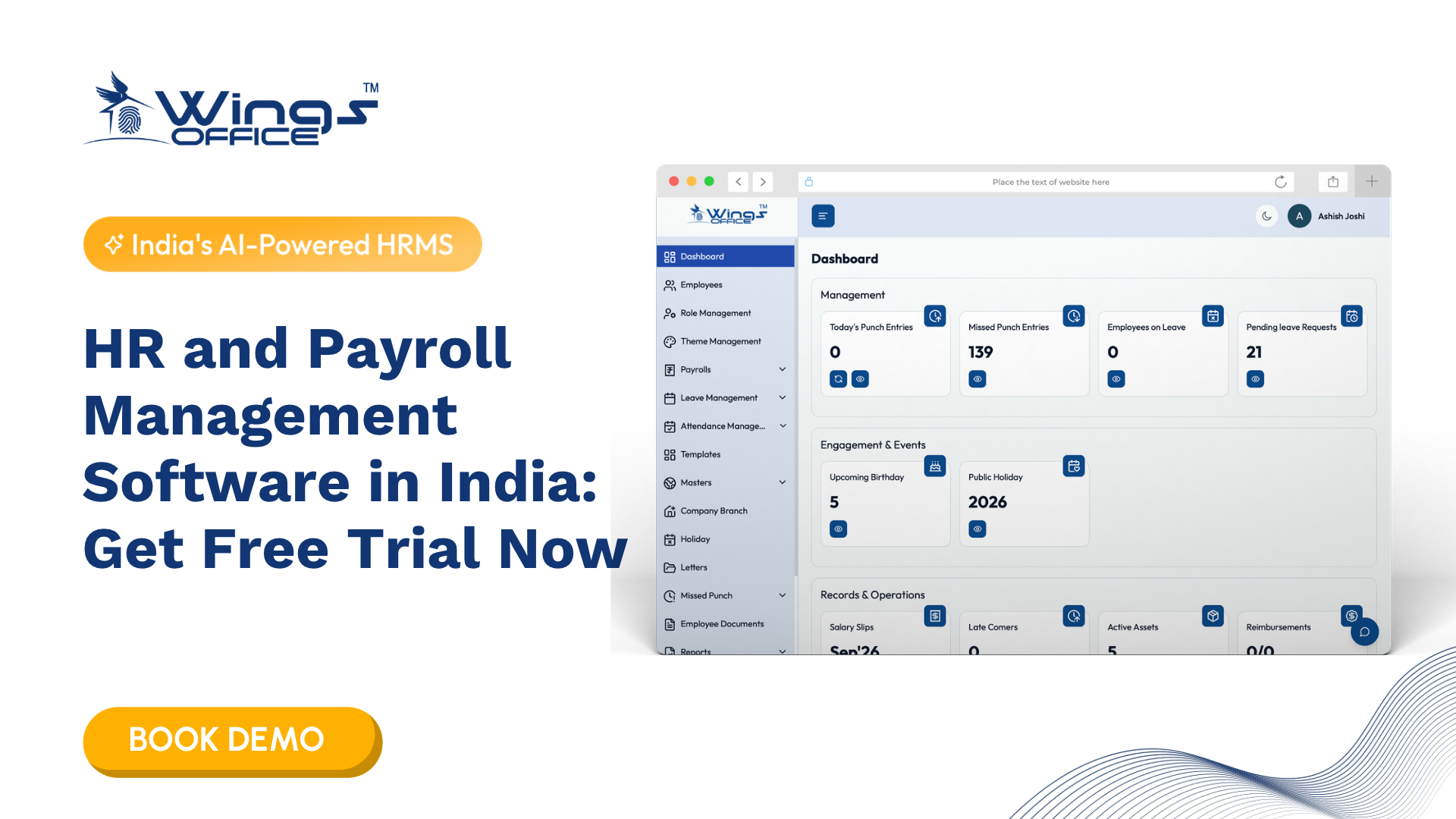
Payroll in India isn’t just about paying people on time. It’s PF deductions, ESI contributions, professional tax that changes state by state, TDS calculations, and statutory filings that carry penalties when you get them wrong. A growing team makes all of this heavier, and spreadsheets stop being a safe option somewhere around the twentieth employee. That’s exactly where hr payroll management software earns its place, by turning a stressful monthly scramble into a repeatable process.
This guide walks through what the software actually does, the features that matter, what a system needs to handle a real team, and how to judge whether a tool is genuinely cost-effective or just cheap.
What HR payroll management software actually does
At its core, this software calculates what each employee is owed, applies the right deductions, and generates the records you need for compliance and accounting. But the useful versions go further. They connect attendance data to salary calculations, store employee records, handle leave balances, generate payslips, and file statutory returns.
Think about the manual version for a second. Someone pulls attendance from a register, cross-checks leave applications, calculates pro-rated salaries for mid-month joiners, works out PF and ESI for each eligible employee, applies the correct TDS slab, and then generates payslips one by one. For a team of thirty, that’s a multi-day job prone to small mistakes that compound. Payroll software collapses that into a workflow where most of the data flows in automatically and the calculations happen the moment you run the cycle.
The shift isn’t only about speed. It’s about building a system where the same rules apply every month, every employee gets a consistent output, and you have an audit trail when a question comes up later.
Why hr payroll management software matters for Indian teams
Compliance is the part that keeps finance heads awake. India’s payroll rules are layered, and they don’t forgive ignorance. Miss a PF deposit deadline and you’re paying interest and damages. Apply the wrong professional tax slab for an employee in Maharashtra versus Karnataka and you’ve created a discrepancy that surfaces during an audit.
Good software handles this quietly in the background. It knows the current PF and ESI thresholds, applies state-specific professional tax, calculates TDS based on declared investments, and generates the challans and returns you need to file. When rates change, as they periodically do, a maintained platform updates the logic so you’re not manually rewriting formulas.
There’s also the employee-experience angle that often gets overlooked. People notice when payslips are late, when reimbursements take three cycles to appear, or when their Form 16 arrives weeks after they asked. A well-run payroll system signals that the company has its act together, which matters more for retention than most founders admit. The smoother your hrms pay roll process runs, the fewer awkward conversations your HR team has to manage each month.
The features that separate good software from basic tools
Not every platform marketed as payroll software does the same job. Some are glorified salary calculators. Others are full HR suites. Here’s what genuinely matters when you’re managing a team.
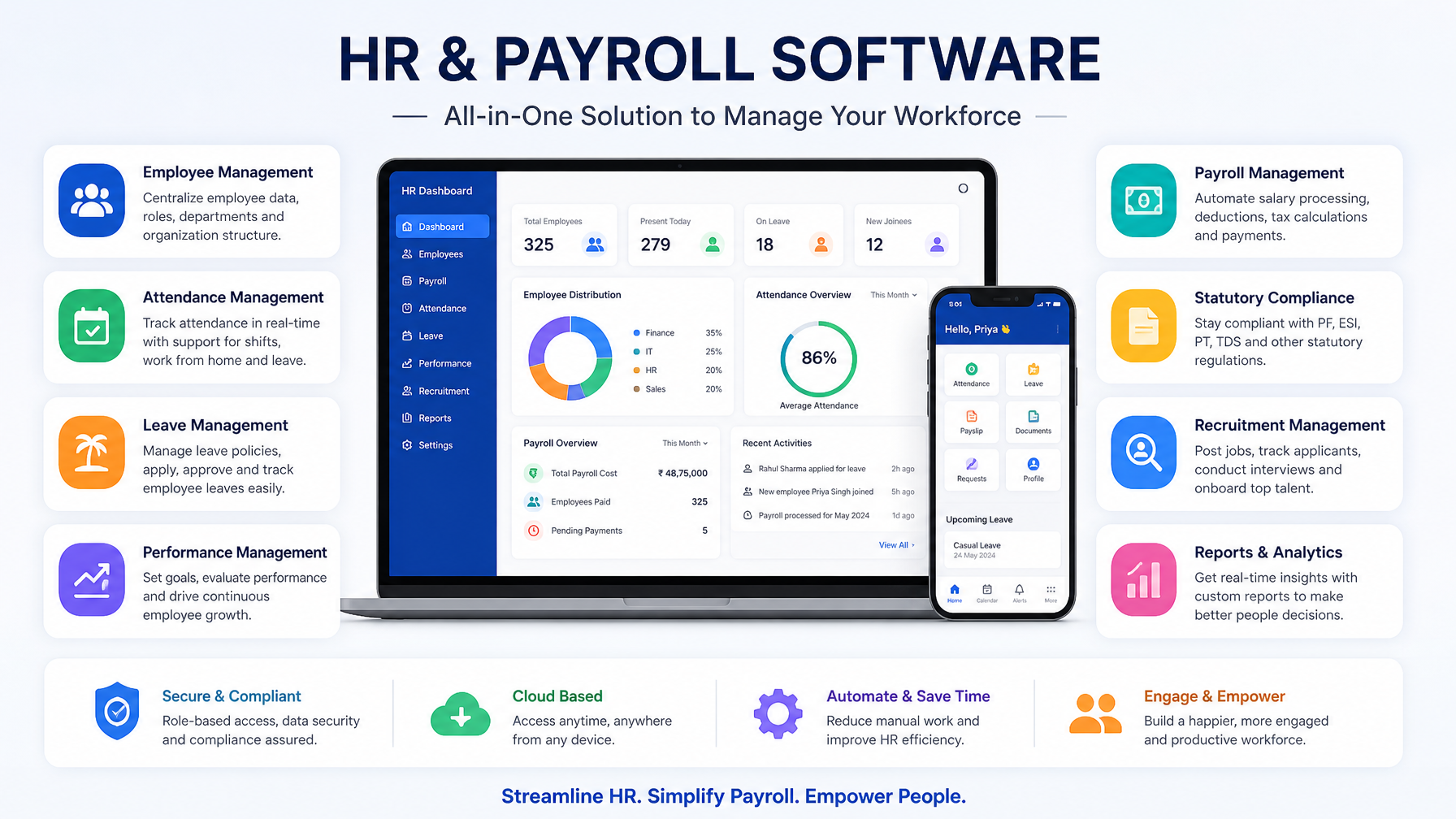
Automated salary processing with configurable components. Every company structures pay differently, basic, HRA, special allowances, variable pay, deductions. The software should let you build these components once and apply them across employees or grades without re-entering data each cycle.
Statutory compliance built in. PF, ESI, TDS, professional tax, and labour welfare fund calculations should happen automatically, with returns and challans generated in the correct format for filing. This is non-negotiable for an Indian business.
Integrated attendance and leave. Payroll accuracy depends entirely on accurate attendance data. A system that handles hrms attendance natively, pulling in clock-ins, approved leaves, and holidays, removes the manual reconciliation step that causes most payroll errors.
Self-service for employees. When staff can download their own payslips, check leave balances, submit tax declarations, and view Form 16 without emailing HR, you free up a surprising amount of administrative time.
Reporting and reconciliation. Finance needs clean reports: salary registers, department-wise cost summaries, statutory liability breakdowns, and variance reports that flag unusual changes between cycles.
A quick way to see how these pieces fit together:
| Feature area | What it solves | Who relies on it |
|---|---|---|
| Automated payroll runs | Eliminates manual calculation errors | Finance, HR |
| Statutory compliance | Avoids penalties and filing mistakes | Finance, Compliance |
| Attendance integration | Ensures pay matches actual work | HR, Managers |
| Employee self-service | Reduces repetitive HR queries | Employees, HR |
| Reporting dashboards | Gives visibility into labour costs | Leadership, Finance |

What a payroll system needs to actually manage a team
A tool that works for ten people can fall apart at a hundred. The requirements scale with team complexity, and it’s worth being honest about where your organization is heading before you choose.
Start with data handling. As you grow, you’ll have employees across locations, possibly across states, each with different tax rules and reimbursement policies. The system needs to handle this variation without you building a separate process for every branch. Multi-entity and multi-location support stops being a luxury once you cross a few offices.
Role-based access matters more than people expect. Payroll data is sensitive. Your HR executive might need to update attendance, but shouldn’t see CTC breakdowns for senior leadership. A system with granular permissions lets you delegate work without exposing salary information across the organisation.
Integration is the quiet requirement that trips up many teams. Your payroll software has to talk to your accounting system, your attendance hardware or app, and sometimes your banking portal for salary disbursement. A platform that exports clean data in formats your other tools accept saves hours of manual re-entry every single month. When your hrms pay roll data flows directly into your accounting ledger, month-end close gets noticeably faster.
Finally, consider support and onboarding. The best-designed software still needs someone to set up your salary structures, import historical data, and configure your compliance rules correctly the first time. Responsive support during that setup phase, and when a filing deadline is looming, is worth paying attention to. This is an area where platforms like Wings Office focus their effort, since getting the initial configuration right is what determines whether the software actually reduces your workload or just moves it around.
Which cost-effective payroll management software makes sense
Price is the wrong first question. The right question is what a payroll mistake costs you, because that’s the real comparison. A platform that saves twenty hours of manual work a month and prevents even one late statutory filing has usually paid for itself several times over.
Most Indian payroll software prices on a per-employee-per-month basis, often with tiers that unlock more features. Some options worth knowing as you compare:
- Wings Office offers an integrated approach that brings payroll, HR records, and attendance together in a single platform, which suits businesses that want to avoid stitching separate tools and want hands-on support through setup and compliance. Pricing starts at 79 PER/ EMP/ MONTH.
- RazorpayX Payroll is popular with startups for its straightforward automation of salary disbursement and statutory payments, and it tends to appeal to teams that already use Razorpay’s ecosystem.
- greytHR has a long track record in the Indian market and covers payroll, compliance, and leave management, often chosen by mid-sized companies.
- Zoho Payroll fits businesses already invested in the Zoho suite, since it connects cleanly with their accounting and HR products.
- Keka positions itself as a broader HR platform with payroll included, suited to organizations wanting performance and engagement features alongside pay processing.
When you weigh these against each other, look past the headline price. A cheaper tool that doesn’t handle your state’s professional tax, or that charges extra for compliance filings, or that leaves you reconciling attendance by hand, ends up more expensive in time and risk. Cost-effectiveness is about total value: accuracy, time saved, compliance coverage, and the quality of support when something goes wrong.
For a smaller team with simple structures, a lean tool may be plenty. For a company spread across locations with varied pay components and growth plans, paying a little more for a platform that scales and handles compliance properly is usually the smarter call.
Making the decision without overthinking it
The practical path is straightforward. List your non-negotiables first: which statutory requirements you must meet, how many employees and locations you have now and expect in a year, and which systems the software must integrate with. Then shortlist two or three platforms that clearly meet those, and run a trial on real data rather than a demo.
The software that wins is rarely the one with the longest feature list. It’s the one that fits how your team actually works, keeps you compliant without manual intervention, and gives you back the days you currently lose to payroll each month.
Frequently Asked Questions
Is payroll software necessary for a small Indian business?
For very small teams with simple pay structures, spreadsheets can work for a while. But once you have statutory obligations like PF and ESI, multiple pay components, or more than fifteen to twenty employees, the risk of manual errors and missed compliance deadlines usually outweighs the cost of software. Many small businesses adopt it precisely to avoid penalties rather than to save time.
How does payroll software handle changing tax and compliance rules in India?
Maintained platforms update their compliance logic when PF thresholds, ESI limits, professional tax slabs, or TDS rules change. This is a key reason to choose a supported, regularly updated product over a static spreadsheet or a one-time tool, since you avoid rewriting calculations yourself every time regulations shift.
Can payroll software integrate with attendance and accounting systems?
Yes, most capable platforms connect with attendance hardware or apps and export clean data to accounting software for ledger entries and reconciliation. Native attendance integration in particular reduces the manual reconciliation that causes most payroll errors, so it’s worth confirming during evaluation.
What makes payroll software cost-effective rather than just cheap?
Cost-effectiveness factors in the time saved, the compliance penalties avoided, and the quality of support, not only the per-employee price. A slightly more expensive platform that handles your state’s rules correctly and prevents late filings often costs less overall than a cheap tool that leaves gaps you fill manually.