Payroll software pricing in India
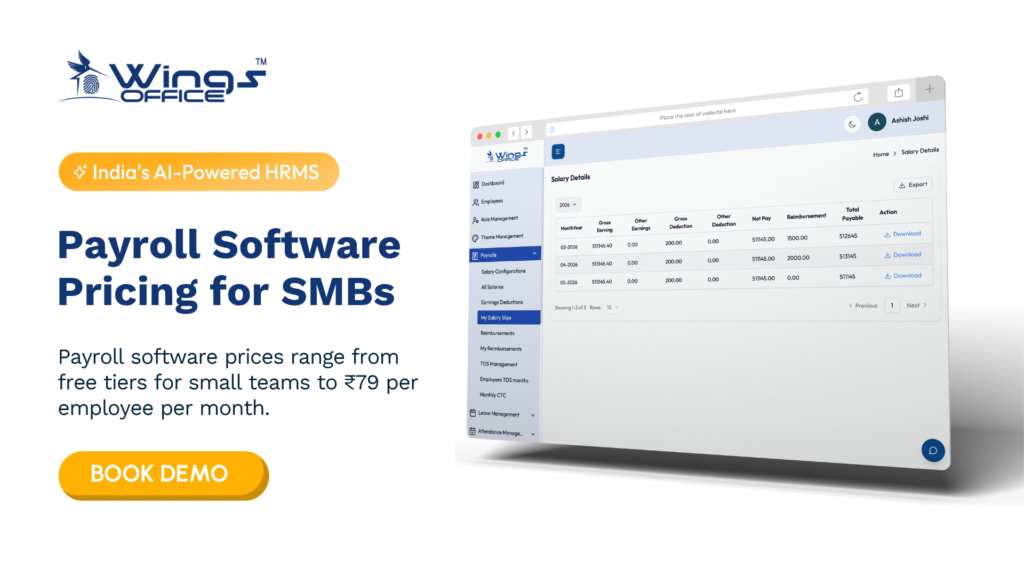
Key Takeaways Payroll software pricing in India usually follows one of a few models (per employee per month, headcount slabs, flat subscriptions, or one-time licenses), and the right model depends on how fast your team is growing. The subscription fee is rarely the full cost, because implementation, data migration, add-on modules, minimum billing clauses, and 18% GST can change what you actually pay. Company size changes what you should pay for: a 15-person startup needs accurate statutory compliance, while a 500-person company needs multi-location, approval workflows, and integrations. A free trial is only useful if you run a real payroll cycle through it, including edge cases like mid-month joiners, loss of pay, and full and final settlements. Payroll software prices in India typically range from free tiers for small teams to ₹79 per employee per month, or ₹2500 to over ₹50,000 per year for flat-rate and enterprise solutions. Most businesses that compare payroll software pricing in India end up comparing the wrong number. The headline per-employee rate on a pricing page tells you very little about your real annual spend. What matters is how that rate scales with headcount, which statutory features sit behind a higher tier, and what you’ll pay before the first payslip ever goes out. This guide breaks down how vendors in India structure their pricing, what different company sizes should expect to budget for, and how to use a trial period to pressure-test a tool before you commit. You’ll also find a shortlist of established options, including where Wings Office fits. What Are the Payroll Software Pricing Models in India? Indian payroll vendors mostly use variations of five pricing structures. Each one rewards a different kind of business, so the model matters as much as the rate. Pricing Model How It Works Best Suited For Watch Out For Per employee per month (PEPM) You pay a fixed amount for each active employee processed every month Growing teams that want costs to track headcount Minimum monthly billing that kicks in regardless of actual headcount Headcount slabs A fixed price covers a range of employees (for example, up to 50) Stable teams that sit comfortably inside one slab Paying for a full slab when you’re just one hire over the threshold Flat subscription One price for the platform, often with a headcount cap Small businesses with predictable teams Caps that force an upgrade sooner than expected Module-based pricing Core payroll is priced separately from attendance, leave, expenses, and performance Companies that only need specific functions Essential features quietly placed inside paid add-ons One-time license (on-premise) Upfront purchase plus annual maintenance charges Organisations with strict data residency or IT control requirements Upgrade costs, server maintenance, and slower compliance updates PEPM is the most common model among cloud payroll vendors in India today. It feels fair because you only pay for people you actually process. The catch is that it rewards companies whose headcount is flat or shrinking, while fast-hiring startups can watch their bill climb faster than their revenue. Slab pricing works in the opposite direction. If you have 48 employees on a “up to 50” plan, you’re getting excellent value. If you have 52, you’re likely paying for a jump to the next tier that covers far more people than you have. What Actually Drives the Number on Your Quote Two vendors quoting similar per-employee rates can produce very different annual invoices. The gap usually comes from the factors below, and most of them don’t appear on a public pricing page. Statutory compliance depth. Basic plans typically handle PF and TDS calculations. Fuller compliance means ESI, professional tax across multiple states, Labour Welfare Fund contributions, quarterly Form 24Q filing support, and Form 16 generation. If you operate in several states, professional tax alone adds real complexity, since rates and slabs differ by state and some states don’t levy it at all. Implementation and data migration. Moving historical salary data, YTD tax figures, and employee master records from spreadsheets or an older system takes effort. Some vendors include onboarding in the subscription. Others charge a one-time setup fee, and the amount often depends on how messy your existing data is. Integrations. Connecting payroll to your attendance devices, accounting software, or bank for salary disbursement may be free, may require a higher plan, or may be billed as a custom project. Taxes. Software subscriptions in India attract 18% GST. It sounds obvious, but many internal budget approvals get built on pre-tax figures and come up short. Support level. Email-only support is standard on entry plans. A dedicated account manager or priority phone support during payroll week usually costs more, and for a first-time implementation it’s often worth it. What Will Payroll Software Cost for Your Company Size? Rather than quote rupee figures that change every quarter, it’s more useful to look at what each company size should be paying for. Your budget should follow your operational needs, not the other way around. Micro businesses and early startups (under 20 employees) At this stage, your biggest risk is compliance errors, not efficiency. You need accurate salary computation, correct PF and TDS deductions, and payslips your employees can trust. A flat plan or a low-tier PEPM plan usually covers this. Be wary of vendors whose minimum monthly charge assumes a larger team, because you’ll end up paying a per-head rate far above the advertised one. Small and growing businesses (20 to 200 employees) This is where payroll stops being a monthly task and starts being a process. You’ll want leave and attendance integration, employee self-service for tax declarations and payslips, reimbursement handling, and support for both old and new tax regimes. Most businesses in this band get the best value from mid-tier plans. Paying for enterprise features now, on the assumption you’ll grow into them, is one of the most common forms of overspending. Mid-sized companies (200 to 1,000 employees) Multi-location payroll, role-based access, approval workflows, and audit trails become necessary rather than nice-to-have. You’ll likely negotiate a custom quote rather