
Key Takeaways
- Payroll management software automates salary calculations, statutory deductions, and payslip generation so founding teams stop running payroll in spreadsheets.
- Startups in India need software that handles PF, ESI, TDS, and professional tax correctly, because manual compliance errors invite penalties early.
- The best fit depends on team size, growth plans, and whether you want payroll bundled with HR, attendance, and accounting.
- Wings Office offers a payroll module built for small and growing Indian teams, covering salary processing and statutory compliance in one place.
- Evaluate on compliance accuracy, ease of setup, integration, and support, not just price.

Run payroll wrong once in India and you’ll feel it fast: a wrong TDS deduction, a missed PF challan, an employee asking why their payslip doesn’t match their offer letter. For a startup where the founder often doubles as the HR and finance team, these aren’t minor slip-ups. They cost money, trust, and hours you don’t have. This is exactly where payroll management software earns its place, and this guide walks through the top-rated options for startups in India, what to look for, and how the right tool keeps you compliant without hiring a full payroll team.
What payroll management software actually does and why startups need it
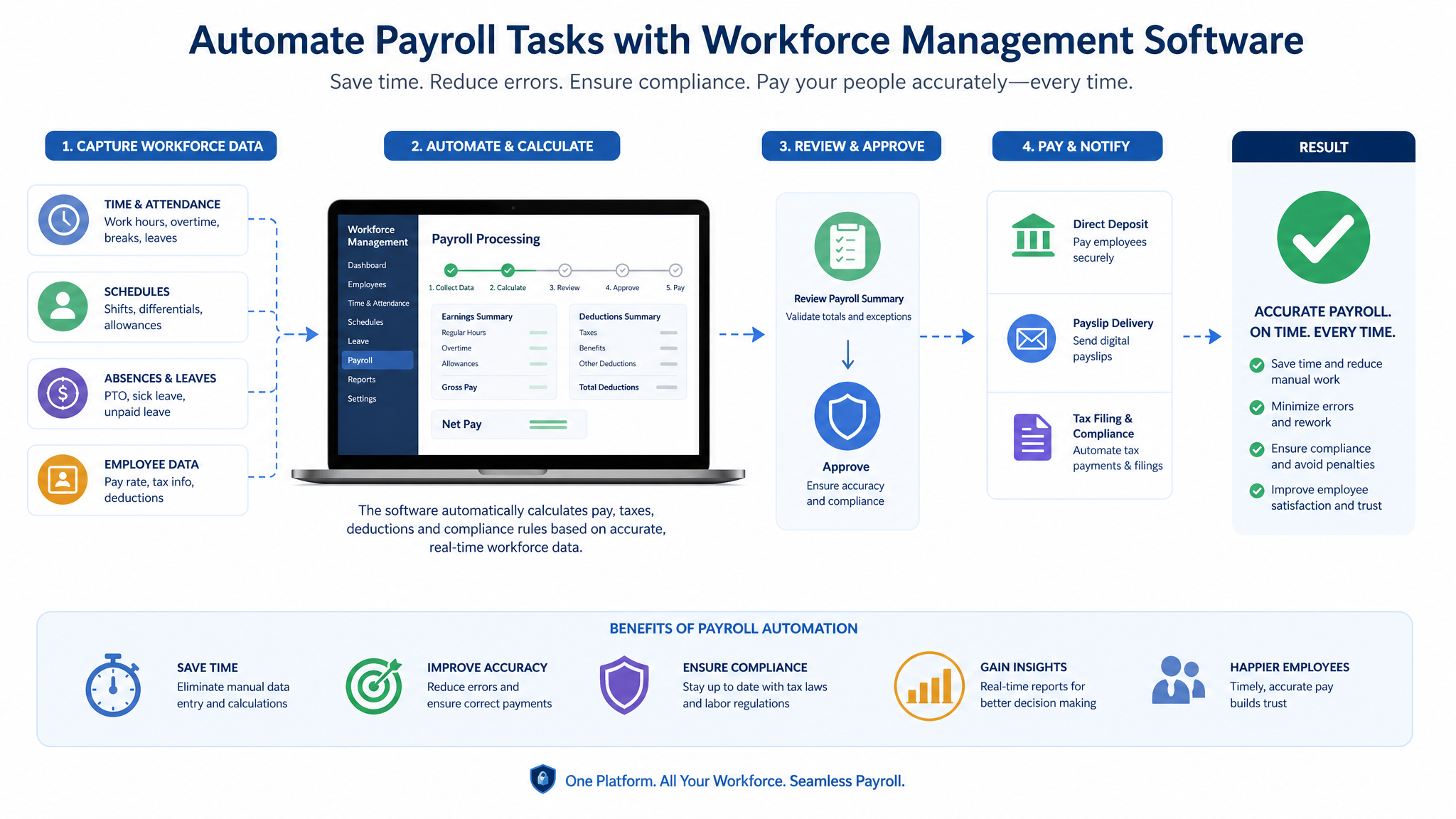
At its core, payroll software takes the monthly chaos of paying people and turns it into a repeatable process. It calculates gross-to-net salary, applies deductions for provident fund, employee state insurance, income tax, and professional tax, generates payslips, and prepares the files you need to file with government portals. Instead of maintaining a brittle spreadsheet that only one person understands, you get a system that applies the same rules every cycle.
For a startup, the appeal is less about scale and more about survival. Early-stage teams run lean, and payroll is one of those tasks that feels small until it breaks. A single miscalculated TDS figure can mean reconciling with the income tax department months later. A missed PF deposit can trigger interest and damages. When you’re juggling product, fundraising, and hiring, you don’t want statutory compliance sitting in someone’s memory.
There’s also the employee-experience angle. People notice when payslips are late, inconsistent, or missing breakdowns. A clean, on-time payslip signals that the company is run properly, which matters when you’re competing for talent against larger firms with established HR functions.
Why startups specifically lean on payroll software early
Larger companies can absorb a dedicated payroll executive. Startups usually can’t, so the software becomes the payroll executive. That shift happens for a few practical reasons.
The first is time. Manual payroll for even ten people eats a surprising number of hours once you factor in attendance adjustments, reimbursements, new joiners, and exits. Automating it frees the founder or ops lead to do work that actually moves the business.
The second is accuracy under changing rules. India’s payroll regulations shift, and wage definitions, contribution thresholds, and filing formats get updated. Keeping track manually is a real risk. Good software updates these rules centrally, so you’re not reading government circulars at month-end.
The third is audit readiness. Investors, during due diligence, often ask for payroll records and statutory compliance proof. A system that stores structured records and generates reports on demand makes that conversation far shorter than digging through email attachments.
What features should startups look for in payroll software in India
Not every feature matters at ten employees. But a handful are non-negotiable if you want the tool to grow with you rather than get replaced in a year. Here’s what deserves real attention during evaluation.
- Statutory compliance built in, meaning the software calculates and tracks PF, ESI, TDS, and professional tax according to current rules, and ideally helps you generate the challans and return files you need for filing.
- Automated salary structuring, so you can define components like basic, HRA, special allowance, and reimbursements once, then apply them consistently across employees without rebuilding the math each month.
- Payslip generation and self-service access, letting employees download their own payslips and tax statements instead of emailing HR, which saves back-and-forth and looks professional.
- Attendance and leave integration, because payroll accuracy depends on correct days worked, and a tool that pulls leave and attendance data automatically removes a major source of manual error.
- Scalability and multi-state support, since professional tax rules differ by state, and a startup hiring remote employees across India needs software that applies the right slabs automatically.
- Integration with accounting, so salary expenses and liabilities flow into your books without re-entering data, keeping your financial reporting consistent.
A useful filter: if a feature saves you more time than it takes to set up within the first two or three payroll cycles, it’s worth having. If it’s a feature you’ll “grow into someday,” it shouldn’t drive your decision now.

Which is the best payroll management software for startups in India
There’s no single answer that fits every startup, and anyone claiming otherwise is selling something. The “best” tool depends on your headcount today, your hiring plans, your budget, and whether you want payroll as a standalone function or bundled with HR and attendance.
That said, for most early-stage Indian startups, the strongest fit is software that pairs genuine statutory compliance with a simple setup and fair pricing. You want something a non-specialist can run confidently, that won’t require a consultant to configure, and that keeps up with India payroll compliance changes on its own.
Wings Office fits this profile well for small and growing teams. Its payroll module handles salary processing, automated deductions, payslip generation, and statutory calculations in one place, and it sits alongside other office and operations tools, so you’re not stitching together separate systems. For a founder who wants payroll handled correctly without building a dedicated function, it covers the essentials without the complexity of enterprise HR suites. It suits startups that value an integrated, straightforward setup over a sprawling feature list they’ll never fully use.
Top payroll software options for startups in India
To make the comparison useful, here’s a look at well-known options alongside Wings Office. Each suits a slightly different kind of team, so match the profile to your own situation rather than chasing the longest feature list.
| Software | Overview | Key strengths | Best for |
|---|---|---|---|
| Wings Office | An integrated payroll and office operations platform with salary processing and statutory compliance built in | Automated PF, ESI, and TDS handling, payslip generation, integration with wider office tools | Small and growing startups wanting payroll bundled with everyday operations |
| Zoho Payroll | Cloud payroll from the Zoho ecosystem, tightly connected to Zoho Books and People | Clean interface, strong compliance support, deep integration if you already use Zoho | Startups already invested in the Zoho suite |
| RazorpayX Payroll | Payroll with automated disbursement and compliance from the Razorpay stack | Automated salary payouts, compliance filings, developer-friendly ecosystem | Startups wanting payments and payroll in one financial stack |
| Keka | HR and payroll platform with broader people-management features | Strong HR, performance, and attendance modules alongside payroll | Startups scaling past the point of pure payroll and investing in HR |
| greytHR | Established HR and payroll software widely used by Indian SMEs | Mature compliance handling, extensive statutory reports | Teams that want a proven, compliance-heavy HR system |
A quick note on honesty here: pricing, exact feature tiers, and support quality change over time, so treat this as a starting shortlist and verify current specifics directly before you buy. The right pick is the one whose default setup matches how your startup already works.
Common payroll challenges startups face in India
Understanding where payroll goes wrong helps you choose software that actually solves your problems rather than one that looks impressive in a demo. A few patterns show up repeatedly in early-stage Indian companies.
Compliance complexity tops the list. Between PF, ESI, TDS, professional tax, and state-specific rules, there’s a lot to track, and the penalties for getting it wrong are real. Founders often underestimate this until the first notice arrives. Then there’s the spreadsheet trap, where payroll lives in a file that works until the person who built it is on leave or leaves the company, taking the logic with them.
Handling exceptions is another quiet drain. New joiners mid-cycle, employees leaving with pending settlements, bonus payouts, and loan recoveries all break a simple monthly routine. Manual systems handle these poorly, and errors here directly affect employee trust. Finally, there’s the data-reconciliation problem, where salary figures in payroll don’t match what’s in the accounting books, creating messy month-end closes and awkward audit moments.
Most of these aren’t exotic. They’re the predictable friction of paying people in a regulated environment with a small team, and they’re precisely what the right software removes.
How payroll software helps Indian startups manage salaries and payslips
The practical value shows up in the monthly cycle. Instead of recalculating everyone’s salary from scratch, you set up each employee’s structure once, basic pay, allowances, deductions, and reimbursements, and the software applies it every month. Attendance and leave adjustments pull in automatically if your tools are connected, so days worked translate into correct pay without manual tallying.
Payslips then generate in a consistent format with a clear breakdown of earnings and deductions. Employees access them through self-service, which cuts the steady stream of “can you resend my payslip” messages. At year-end, the same system produces tax statements employees need for their own filings, turning what used to be a scramble into a few clicks.
Consider a startup that grows from eight to twenty-five people over a year. Without software, that growth multiplies the payroll workload and the chance of error. With it, adding an employee is a form entry, and the monthly run stays roughly as simple at twenty-five as it was at eight. That stability is the real benefit, predictable effort regardless of headcount.
How payroll software handles PF, ESI, TDS, and other compliance
This is where software stops being a convenience and becomes a safeguard. Let’s take the main statutory elements one at a time.
For provident fund, the software calculates employer and employee contributions based on current wage definitions and contribution rules, then prepares the data you need for your monthly PF filing. Because payroll software handle PF calculations centrally, a change in thresholds updates everywhere at once instead of requiring you to fix every employee record by hand.
ESI follows a similar logic. For employees within the eligibility wage limit, the system computes contributions and tracks who qualifies, which matters because eligibility can change as salaries rise. TDS is often the trickiest for founders, since it depends on each employee’s declared investments, exemptions, and chosen tax regime. Good payroll software collects those declarations, projects annual tax liability, and deducts the right monthly amount so there’s no large shortfall at year-end.
Professional tax adds a state-layer most people forget. Rates and slabs differ across states, and a startup with distributed employees needs the software to apply the correct one per location automatically. Handled together, these functions turn India payroll compliance from a monthly anxiety into a background process, with the records and reports ready whenever an auditor, investor, or the employee asks.
Frequently Asked Questions
Do very small startups with fewer than five employees really need payroll software?
Not always, but even small teams benefit from correct statutory compliance and professional payslips. If your few hires include salaried employees with PF, ESI, or TDS obligations, software reduces the risk of early compliance mistakes that are expensive to fix later. Many tools are affordable at this size, so the question is usually whether the time saved justifies a modest cost, and for most founders it does.
Can payroll software file PF, ESI, and TDS returns for me automatically?
Most software calculates these accurately and generates the files or challans you need, but the level of automation for actual filing varies. Some tools file directly or integrate with government portals, while others prepare everything and leave the submission to you or your accountant. Confirm the exact filing capability during evaluation, since this is where startups most often assume more automation than the tool actually provides.
How long does it take to set up payroll software for a startup?
For a straightforward team, basic setup can take a few hours to a couple of days, mostly spent entering employee details, defining salary structures, and configuring statutory settings. The first payroll run always takes longest because you’re verifying the configuration. After that, monthly cycles are quick. Choosing a tool with a clear setup flow and responsive support shortens this considerably.
Should payroll be separate from HR software, or combined?
It depends on your stage. Very early teams often do fine with focused payroll functionality, while startups building out people operations benefit from combined HR and payroll so attendance, leave, and salary data live together. The downside of a full HR suite early is paying for features you won’t use yet. Pick based on what you’ll realistically use in the next year, not someday.
Payroll isn’t the part of a startup anyone gets excited about, but it’s one of the few areas where a quiet, correct process is worth more than a clever one. Start by mapping your real requirements, team size, compliance scope, and the systems you already run, then shortlist tools that match rather than impress. If you want payroll handled accurately alongside your wider operations without building a dedicated function, Wings Office is worth a close look. Run a trial cycle with your own numbers, and let the first clean, on-time payslip tell you whether you’ve found the right fit.