
I’ve spent two decades writing for companies that sell software, and if there’s one purchase decision I’ve watched go wrong and analysed more than any other, it’s payroll. Not because the products are bad. Because most buyers pick based on a demo that looked polished, not on whether the tool actually fits how their business runs, grows, and gets audited.
Payroll isn’t just “pay people on time”. It’s tax compliance, statutory filings, leave tracking, multi-state or multi-country rules, and the one system in your company where a mistake doesn’t just cost money – it costs trust. Employees notice a wrong pay cheque faster than they notice almost anything else you do as an employer.
If you’re a founder, an IT manager evaluating vendors, a major CFO trying to consolidate three spreadsheets, or a part-time bookkeeper into one system, this guide walks through what actually matters: how startup and mid-size options compare, what Indian compliance demands, cloud versus on-premise trade-offs, and how to handle payroll when you’re running more than one entity. I’ll be honest about where each option falls short, because a vendor never will be.
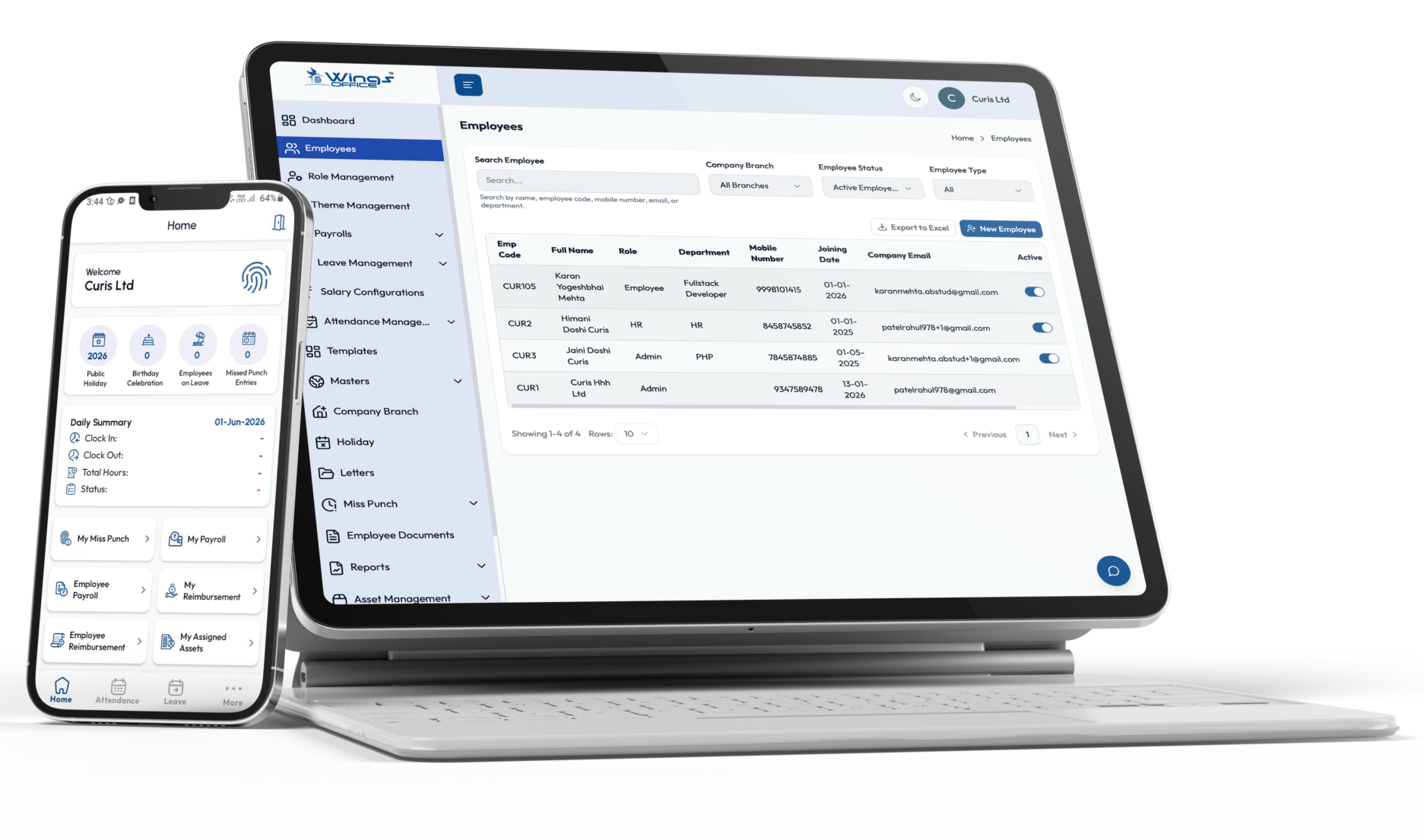
Comparing Leading Payroll Software for Startups
Startups have a specific problem: you need compliance-grade payroll without a full HR department to run it. Here’s how some widely used options stack up for early-stage teams.
Software | Starting Price (approx.) | Best For | Key Limitation |
Zoho Payroll | ₹60/employee/month | Startups already using Zoho suite | Limited depth for complex multi-state tax rules |
Keka | ₹6,999/month (base plans) | Startups wanting HR + payroll combined | Pricier as headcount scales |
RazorpayX Payroll | Free up to 5 employees, then paid | Very early-stage teams, seed to Series A | Fewer advanced compliance reports |
GreytHR | ₹3,495/month onwards | Startups needing strong statutory compliance out of the box | The interface feels dated compared to newer entrants |
Wings Office | Custom pricing (best way get your free quote with their authorized team) | India-based or dual-geography startups | Built with Indian statutory compliance in mind, it covers all types of leading industries. |
The mistake I see founders make constantly: they pick the cheapest tool at 10 employees and outgrow it by 40, then face a painful, expensive migration. Ask any vendor directly: “What happens to my historical payroll data if I need to switch in two years?” Their answer tells you more than their pricing page ever will.
Top-Rated Payroll Software for Medium-Sized Companies
Once you cross roughly 100–150 employees, your needs shift. You’re no longer just processing salaries; you’re managing reimbursements, multiple pay grades, TDS complexities, PF and ESI at scale and, often, regional labour law variations.
- Keka (₹9,999+/month for growth plans): Strong for companies that want payroll tied directly to performance management and HRMS. The reporting depth genuinely helps finance teams during audits.
- Wings Office (custom pricing): The safe, established choice for companies with Indian and global exposure. Support quality is consistent, though the platform can feel heavy for lean teams.
- Darwinbox (custom pricing, typically enterprise-tier): Built for scale, with configurable workflows. Worth it if you have a dedicated HR ops team to manage the configuration; otherwise, it’s overkill.
- Paybooks (₹5,000+/month): A solid middle-ground option, less flashy but dependable for statutory compliance without enterprise pricing.
The honest truth here: at this size, the software matters less than the implementation. I’ve seen companies pay for enterprise-grade tools and still get payroll wrong because nobody mapped their actual policies, leave encashment rules, or gratuity calculations into the system correctly before go-live.
Essential Features for Indian Payroll Compliance
This is where generic, US-built payroll tools quietly fail Indian companies. Compliance here isn’t optional or occasional; it’s monthly, and the penalties for getting it wrong are real.
At minimum, your payroll software needs to handle:
- PF, ESI, and professional tax calculations — automatically updated when government rates change, not manually patched by your finance team.
- TDS computation and Form 16 generation — with the ability to handle old and new tax regime comparisons for employees.
- State-specific labour law variations — minimum wage differences, shop and establishment act rules, and professional tax slabs vary by state.
- Statutory filing support — PF ECR, ESI returns, and TDS returns should be exportable in government-ready formats.
- Audit trails — every salary revision, correction, or manual override should be logged with a timestamp and approver.
If a vendor can’t clearly explain how they handle a mid-year PF rate change or a new labour code rollout, that’s a red flag, not a minor gap. This is precisely why generic international platforms often underperform for companies needing dedicated payroll software in India; the compliance layer here is too specific to bolt on as an afterthought.
Cloud-Based vs On-Premise Payroll Software
This decision used to be a bigger debate than it is today, but it still trips people up.
Cloud-based payroll runs on the vendor’s servers, accessible from anywhere with a login. You get automatic updates when tax laws change, a lower upfront cost, and easier scaling as you add employees or offices. The trade-off is dependency; if the vendor has downtime or a data breach, you feel it directly.
On-premise payroll runs on your own servers, giving you full control over data and customisation. Some regulated industries or government contractors still require this for security reasons. But you’re responsible for maintenance, updates, and every compliance patch, which usually means a dedicated IT resource you have to pay for regardless of headcount.
For most businesses today, cloud wins on pure economics. Unless you have a specific regulatory requirement forcing on-premise deployment, the ongoing cost of self-maintaining compliance updates rarely pencils out against a cloud subscription.
Managing Payroll Across Multiple Companies
If you run more than one legal entity, a holding company with subsidiaries or a group with separate GST registrations, payroll gets genuinely complicated. You need:
- Entity-level segregation for statutory filings, since each company files PF, ESI, and TDS separately even under common ownership.
- Consolidated reporting at the group level for leadership visibility, without merging entity-specific compliance data.
- Shared employee tracking if staff move between entities, so tenure and benefits calculate correctly.
- Role-based access so entity-level finance teams see only their company’s data, while group HR sees everything.
Very few platforms handle this well out of the box. GreytHR and Keka both offer multi-entity modules, but implementation quality varies a lot by how carefully your team sets up entities. hierarchies at the start. This is a case where a rushed setup creates years of reconciliation headaches worth the extra weeks upfront to get right.
Firms managing payroll on behalf of clients, accounting practices in particular, face a similar layering problem, just with more clients instead of more entities. Dedicated payroll software for accountants typically adds client-switching dashboards and bulk-filing tools that generic HR platforms don’t prioritise, because their core user isn’t managing ten companies’ compliance calendars at once.
Final Thoughts
Choosing payroll software isn’t about finding the tool with the most features. It’s about matching a system to your actual complexity — your headcount, your entity structure, your compliance obligations — and being honest about where you’ll be in two years, not just where you are today.
If you’re weighing these decisions and want a second opinion grounded in real implementation experience rather than a sales pitch, our team works directly with businesses navigating exactly this kind of software selection. Reach out, and let’s figure out what actually fits your business.
Frequently Asked Questions
For very small teams, GreytHR and RazorpayX Payroll are commonly recommended for their statutory compliance depth at accessible pricing.
Pricing typically ranges from free (for under 5 employees on some platforms) to ₹200+ per employee per month for enterprise-grade tools, depending on features and support level.
Reputable providers use encryption and comply with data protection standards, but you should verify a vendor’s specific security certifications before signing on, especially for salary and bank data.
Most established Indian payroll platforms handle both, but the quality of automatic rate updates varies — ask vendors directly how quickly they push statutory rate changes.
HR software typically covers recruitment, performance, and employee records, while payroll software focuses specifically on salary processing, tax deductions, and statutory compliance — though many modern platforms combine both.



Helpful guide for selecting the best payroll software in 2026. It explains essential features, compliance considerations, and evaluation tips, helping businesses choose a reliable payroll solution with confidence.
Thanks for sharing your suggestion. Share with your friends and family who are looking for a trustworthy HRMS solution.
This blog offers valuable insights into modern HR management. Businesses can simplify daily HR operations by adopting the best HRMS software in India, helping manage payroll, attendance, employee records, recruitment, and workforce processes more efficiently. A reliable HRMS solution can improve productivity, accuracy, and overall employee management.